Trying to find engaging content for kids that actually teaches them something valuable can feel like searching for a needle in a haystack, right? As a parent and someone deeply invested in early childhood education, I’ve spent countless hours navigating the endless sea of shows out there.

That’s why I was genuinely thrilled when I saw how shows like Robocar Poli brilliantly blend entertainment with crucial learning. It’s not just about flashy rescue missions; it’s about introducing incredible STEM concepts – Science, Technology, Engineering, and Math – in a way that even the youngest viewers can grasp and enjoy.
Think about it: our kids are growing up in a world increasingly driven by innovation, and sparking their curiosity about how things work, about problem-solving, and about teamwork through their favorite animated heroes is simply genius.
I’ve personally observed how a seemingly simple episode can ignite a spark, leading to questions about gears, gravity, or even basic mechanics. It’s truly amazing to witness!
So, if you’re like me and want to give your little ones a head start in understanding the world around them while they’re having fun, you’re in the right place.
Let’s delve into how Robocar Poli champions STEM education in ways you might not have even noticed. Let’s unpack exactly how this beloved animated series is making a real difference.
Oh, you are in for a treat! As a parent, I totally get that feeling of wanting to find engaging content that actually sticks with our kids, helping them learn and grow without them even realizing they’re in “school mode.” I’ve been there, sifting through endless options, and let me tell you, when I discovered how deeply embedded STEM principles are in a show like Robocar Poli, it was like hitting the jackpot.
It’s not just colorful cars and exciting rescues; it’s a brilliant, subtle curriculum that’s prepping our little ones for a future where innovation is key.
My kids, and honestly, even I, have been captivated by how the show masterfully weaves in critical concepts, making learning feel like an adventure. So, let’s dive into the fascinating world of Broomstown and uncover the incredible ways Robocar Poli is secretly nurturing the next generation of engineers, scientists, and problem-solvers.
Unraveling Real-World Physics and Mechanics
You know, it’s truly fascinating how a seemingly simple animated series can lay the groundwork for understanding complex physics and mechanical principles. When you watch the rescue team in action, you’ll quickly realize that their solutions aren’t just magical transformations; they’re often rooted in practical applications of science. Take Roy, the fire truck, for instance. His ladder extends, retracts, and pivots with such precision, demonstrating basic lever and pulley systems. Or consider how Poli, the police car, navigates tricky situations, often requiring an understanding of friction, momentum, and force to stop safely or maneuver through tight spots. I’ve personally seen my own kids, after watching an episode, start questioning how a crane works or why a certain vehicle can go faster than another. It’s not just about the “wow” factor of a transforming vehicle; it’s the subtle education happening in the background, showing how different parts work together, how weight distribution matters, and the sheer power of simple machines. The show doesn’t use academic jargon, but it visually presents these concepts, sparking that innate curiosity in young minds. It’s like a visual textbook without the boring bits, where every rescue is a lesson in applied science, delivered in the most engaging way possible.
The Marvel of Simple Machines in Action
It’s easy to overlook, but Robocar Poli is a treasure trove of simple machines! From Roy’s extendable ladder to the mechanisms that allow the cars to transform, these aren’t just cool visual effects; they’re demonstrations of how levers, pulleys, and wheels make work easier. Think about Helly, the helicopter. The way his rotors generate lift and allow him to fly and hover is a fantastic, if simplified, introduction to aerodynamics and mechanical forces. Each time a character uses a winch to pull something, or a ramp to get to a higher level, children are absorbing foundational engineering principles. I’ve often paused an episode and pointed out to my kids, “Look, that’s a ramp! It helps them move things up without as much effort!” These moments, small as they might seem, build a mental library of how the physical world operates. The show’s consistent portrayal of these tools in problem-solving scenarios helps children intuitively grasp their purpose and function, setting the stage for more formal learning down the line.
Understanding Cause and Effect Through Rescue Operations
One of the most powerful lessons Robocar Poli teaches is the concept of cause and effect. Every problem in Broomstown, whether it’s a car stuck in a ditch or a bridge that’s collapsed, has a cause, and the rescue team’s actions lead to a specific effect. They don’t just magically fix things; they analyze the situation, brainstorm solutions, and then execute a plan. This sequence of identifying a problem, understanding its root, and then logically applying a solution is a cornerstone of scientific thinking. For example, if a vehicle runs out of fuel, the effect is that it’s stranded. The cause is obvious. The solution involves Amber, the ambulance, bringing fuel. It’s a clear, digestible chain of events that helps children develop logical reasoning skills. My kids often try to predict what the rescue team will do next, showing that they’re internalizing this problem-solving methodology. This isn’t just entertainment; it’s a masterclass in critical thinking, presented in a format that’s utterly captivating for young viewers.
Fostering Ingenuity and Inventive Thinking
There’s a genuine spark of innovation that Robocar Poli ignites in children. Beyond just understanding how things work, the show consistently highlights the importance of creating new solutions or adapting existing ones to overcome challenges. Jin, the operations manager, is often seen inventing new gadgets or devising plans that require creative problem-solving and a touch of inventive flair. This isn’t about teaching them to be master inventors overnight, but rather instilling the mindset that problems have solutions, and sometimes those solutions require a bit of out-of-the-box thinking. I’ve noticed my children, after watching an episode where Jin designs a custom tool for a specific rescue, suddenly become more interested in building things with their blocks or drawing up their “inventions.” It fosters a sense of agency and encourages them to believe that they, too, can come up with clever ways to tackle difficulties. This emphasis on creative application of knowledge is a huge part of what makes the show so beneficial for nurturing future STEM enthusiasts.
Designing Solutions to Unexpected Problems
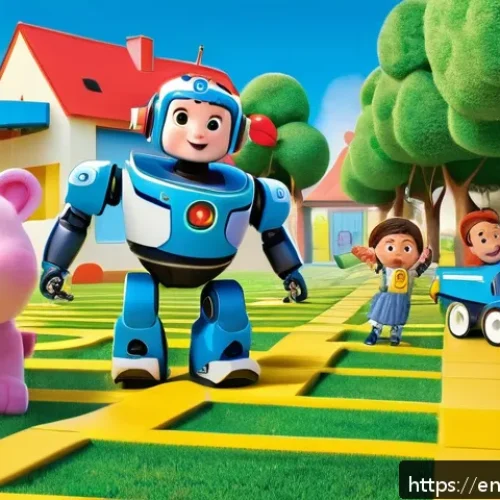
The beauty of Robocar Poli lies in its unpredictable rescue scenarios, which demand more than just brute force; they require genuine design thinking. Whether it’s creating a makeshift bridge to cross a gap or modifying a vehicle to navigate a tricky terrain, the team is constantly engaged in a design process. They identify the constraints, conceptualize potential solutions, and then implement the best approach. This iterative process of problem-solving through design is a fundamental aspect of engineering. For example, in an episode where they encounter a construction zone maze, the team uses spatial reasoning and a grid map to navigate and rescue a stranded vehicle. This visually demonstrates planning and strategic thinking. It teaches kids that failures are opportunities to learn and refine their methods, a truly invaluable lesson for any aspiring innovator. I’ve always admired how they show the process, not just the outcome, allowing children to follow along with the logical steps.
Encouraging Resourcefulness and Adaptation
One of the coolest aspects of the Robocar Poli team is their incredible resourcefulness. They often find themselves in situations where the standard approach just won’t cut it, forcing them to think on their feet and adapt. This could mean using an unexpected item as a tool, or combining their unique abilities in novel ways to create a solution. This showcases the power of adaptation and making the most of what you have, which is a critical skill in both engineering and everyday life. For instance, if a road is blocked, they might find an alternative route or figure out a way to clear the obstruction using available resources. This teaches children flexibility in thinking and problem-solving, rather than rigidly adhering to a single method. It’s an inspiring display of practical intelligence that resonates deeply with kids, prompting them to look at their own surroundings with a more analytical and creative eye.
The Power of Collaborative Problem Solving
What truly sets Robocar Poli apart, in my opinion, is its unwavering focus on teamwork. Every single rescue mission is a testament to the idea that complex problems are best solved when individuals with diverse skills come together. Poli brings his quick thinking and police car abilities, Roy offers strength and fire-fighting expertise, Amber provides medical knowledge and empathy, and Helly adds aerial surveillance and strategic insight. Then there’s Jin, the brilliant human operator, who coordinates everything from the control center. This constant display of collaboration isn’t just about being “nice”; it’s a practical demonstration of how different disciplines (science, technology, engineering, mathematics) converge in real-world scenarios. My children have learned so much about the importance of communication, listening to others’ ideas, and contributing their own strengths to a common goal. It’s an invaluable lesson that extends far beyond STEM, teaching them critical social-emotional skills that are absolutely essential for future success in any field, especially those requiring complex project work.
Synergy of Specialized Skills
The rescue team is a perfect example of a synergistic unit, where the combined efforts of its members are greater than the sum of their individual parts. Poli, as the agile and observant police car, excels at reconnaissance and precise maneuvers. Roy, the robust fire truck, brings the muscle and specialized equipment for heavy lifting and fire suppression. Amber, the empathetic ambulance, handles medical emergencies and provides comforting support, while Helly, the helicopter, offers an indispensable bird’s-eye view and rapid transport capabilities. Jin, the human operator, ties it all together with her strategic planning and technological support. This specialization and subsequent integration of skills demonstrate how different areas of expertise are needed to solve multifaceted problems effectively, mirroring real-world engineering teams where mechanical engineers, software developers, and project managers must collaborate. Watching this in action teaches children about the value of different roles and how they contribute to a shared objective.
Communication: The Glue of Teamwork
Beyond individual skills, the show consistently emphasizes effective communication as the bedrock of successful teamwork. Jin’s role in the control center is pivotal, as she’s constantly relaying information, coordinating movements, and ensuring everyone is on the same page. The characters frequently talk through their plans, share observations, and alert each other to dangers. This constant dialogue teaches children that clear and concise communication isn’t just polite; it’s absolutely crucial for executing complex tasks safely and efficiently. I’ve often seen my kids mimicking Jin, giving “instructions” to their toys during playtime, which just shows how deeply this aspect of the show resonates. It underscores the practical importance of speaking clearly, listening actively, and confirming understanding, all vital soft skills that complement technical STEM knowledge perfectly. Without strong communication, even the most brilliant individual ideas can fall flat, and Robocar Poli illustrates this beautifully in every episode.
Beyond the Rescue: Safety as Applied Science
It might not immediately jump out as a STEM topic, but Robocar Poli seamlessly integrates safety education, which is, at its heart, applied science. Each episode, while thrilling, carries an underlying message about understanding risks and implementing preventative measures. This isn’t just about memorizing rules; it’s about understanding the “why” behind them, which is where the scientific thinking comes in. Whether it’s traffic safety, electrical safety, or general common sense around construction sites, the show breaks down potential hazards and demonstrates logical ways to avoid or mitigate them. I’ve been genuinely impressed by how many everyday safety tips my children have absorbed, not because I lectured them, but because they saw Poli and his friends demonstrate the importance of these actions. It’s a prime example of how scientific understanding—of gravity, friction, electricity, or even human behavior—can lead to safer, more predictable outcomes in daily life.
Deconstructing Hazards and Prevention
Every incident in Broomstown serves as a lesson in risk assessment and hazard prevention. The show frequently depicts scenarios where characters face dangers due to carelessness, a lack of awareness, or unforeseen circumstances. The rescue team then doesn’t just save the day; they often explain why the accident happened and how it could have been prevented. For example, if a character is playing unsafely near a construction site, the episode will highlight the dangers of heavy equipment, unstable materials, and restricted access. This approach encourages children to analyze situations, identify potential risks, and understand the consequences of certain actions. It’s a foundational step in scientific inquiry – observing, understanding, and then predicting. It’s truly amazing to see my kids pointing out potential dangers when we’re out and about, a direct result of the thoughtful safety education woven into the fabric of the show.
The Science Behind Safe Practices
Safety rules aren’t arbitrary; they are often based on scientific principles, and Robocar Poli implicitly teaches this connection. Consider episodes focused on traffic safety. They explain why we need to stop at red lights (to avoid collisions, understanding speed and momentum) or why wearing seatbelts is crucial (inertia and force during impact). Electrical safety episodes might touch upon the dangers of water and electricity (conductivity). By demonstrating the immediate, tangible benefits of following safety protocols, the show helps children connect abstract rules to real-world consequences, thereby fostering a deeper and more lasting understanding. It’s not just “don’t do this”; it’s “don’t do this *because*…” This deeper level of understanding is vital for developing independent, critical thinkers who can make informed decisions about their own safety and the safety of those around them. My children are far more likely to remember a safety rule if they’ve seen it dramatically illustrated by their favorite rescue heroes.
Navigating Spatial Reasoning and Map Skills
Have you ever noticed how much emphasis Robocar Poli places on understanding space and navigation? This is where spatial reasoning and early map skills truly shine! In almost every rescue, whether it’s finding a lost character or navigating a complicated area, the team relies on understanding directions, distances, and layouts. Helly, the helicopter, often provides an aerial view, creating “grid maps” and giving coordinates to Poli on the ground. This visually introduces concepts like cardinal directions (north, south, east, west), relative positions (left, right, ahead, behind), and even basic grid systems. I’ve personally observed my kids developing a much stronger sense of direction and even trying to draw their own “maps” of our house or neighborhood after watching episodes that heavily feature navigation. It’s a playful yet powerful way to build foundational mathematical and geographical skills that are crucial for everything from reading a map to understanding architectural blueprints or even coding. It’s genuinely a joy to see them connecting the dots between a fun cartoon and real-world spatial awareness.
Developing Directional Awareness
The consistent use of directional cues within the show is a brilliant way to build foundational spatial awareness. Characters frequently give and follow instructions like “turn left at the big tree” or “head straight for 50 meters.” Helly’s role in guiding Poli through complex environments using specific directions, sometimes even with grid coordinates, is a subtle but effective way to teach children about orientation and movement within space. This isn’t just memorizing “left” and “right”; it’s about understanding how those directions relate to a constantly changing environment. My kids, after an episode like “Construction Zone Maze Rescue,” started playing games where one would close their eyes, and the other would give them directional commands to navigate a room. It was adorable and incredibly effective! This kind of play, inspired by the show, actively strengthens their understanding of directional concepts, which is an early but essential step in developing geometric and navigational skills.
Visualizing and Interpreting Maps

Robocar Poli frequently incorporates visual representations of the environment, often in the form of simple maps or grid layouts, especially during complex rescue operations. Jin in the control center uses digital maps to track the team and identify locations, while Helly provides live aerial feeds to help Poli navigate. This exposure normalizes the idea of using a map as a tool for problem-solving and navigation. Children learn that maps are not just abstract drawings but practical representations of space that can help them find their way or understand an area. This is a crucial skill for future STEM pursuits, particularly in fields like urban planning, robotics, or even computer programming where spatial relationships are key. I’ve noticed my children paying more attention to actual maps when we travel, eagerly trying to follow along with our route. This show genuinely makes map reading seem less like a chore and more like an exciting puzzle to solve.
The Heart of Engineering: Design and Construction
At its core, Robocar Poli is a continuous lesson in engineering design and construction. Think about it: the entire premise revolves around a team of transforming vehicles, which are essentially marvels of engineering themselves! Beyond their transformations, however, the show often features building, repairing, and infrastructure challenges. When a bridge breaks, or a road needs fixing, Roy and the construction vehicles like Max and Carry step in, demonstrating the principles of structural integrity, material science (even if simplified), and logical construction sequences. I’ve watched episodes where they carefully plan how to lift a heavy object, considering balance and leverage, or how to reinforce a damaged structure. These aren’t just random acts of building; they’re systematic approaches to problem-solving that highlight the engineering process. It teaches kids that constructing something durable and functional requires planning, precision, and an understanding of physical limits. It’s an immersive, playful introduction to what it means to build the world around us, inspiring a curiosity about how everyday structures are designed and maintained.
Building Strong Foundations: Structural Integrity
Many episodes of Robocar Poli involve scenarios where existing structures are damaged or new ones need to be built. Whether it’s repairing a crumbling road, shoring up a weak wall, or constructing a temporary bridge, the show subtly introduces concepts of structural integrity. Roy, with his robust crane and bulldozer attachments, often plays a key role in these construction efforts, showcasing how stable bases, strong materials, and proper support are essential. While it’s presented in a simplified manner, children learn that structures need to be able to withstand forces and weight. This provides an intuitive understanding of basic physics and architectural principles. I’ve seen my children, after watching an episode about a collapsing structure, become more deliberate in how they build their own block towers, testing their stability and thinking about the base. It’s a wonderful example of how the show translates complex engineering ideas into digestible, relatable lessons for young minds.
Understanding Tools and Their Purposes
A crucial part of engineering and construction is knowing your tools and how to use them effectively, and Robocar Poli excels at this. Each member of the rescue team and the supporting cast of vehicles in Broomstown has specialized tools and functions. Roy uses his crane, bulldozer, and water cannon. Amber has medical equipment. Even characters like Max, the road roller, and Dump, the dump truck, showcase specific machinery for specific tasks. The show implicitly teaches that different tools are designed for different jobs and that choosing the right tool is essential for efficiency and safety. This is a practical, hands-on (or wheels-on!) lesson in technology and engineering. It encourages children to observe the world around them, recognize different tools and machines, and understand their functions, laying a groundwork for appreciating the technology that makes our lives possible. My children love identifying the different vehicles and what “job” they do, a direct result of the show’s clear portrayal of specialized tools.
Unlocking Mathematical Concepts Through Play
Mathematics, often seen as a daunting subject, becomes incredibly accessible and even exciting through the adventures of Robocar Poli. While the show doesn’t explicitly run through multiplication tables, it consistently incorporates foundational mathematical concepts in a practical, problem-solving context. Think about the estimation of distances during a rescue, counting the number of items needed for a repair, or even understanding simple sequences of operations. When Helly uses a “grid map” to guide Poli, that’s a brilliant introduction to coordinate systems and spatial geometry. When the team plans a rescue, they implicitly calculate the best route, considering factors like time and resources, which are all mathematical considerations. It’s not about rote memorization; it’s about seeing math as a functional language for understanding and interacting with the world. I’ve noticed my kids, influenced by the show, naturally start counting objects, talking about “how many more” or “how much longer,” demonstrating an organic development of numeracy and quantitative reasoning. It’s a fantastic way to demystify math and make it an integral part of their understanding of how things work.
Counting, Estimation, and Measurement in Missions
In countless episodes, subtle mathematical concepts like counting, estimation, and even basic measurement are interwoven into the rescue narratives. When a certain number of planks are needed to fix a bridge, or the team estimates how much fuel is left in a stranded vehicle, these are all moments where quantitative reasoning comes into play. The characters might even talk about “how long” a task will take or “how far” they need to travel. While these aren’t formal math lessons, they provide a continuous, real-world context for these concepts, making them intuitive for young viewers. My kids will often try to “count” how many steps it takes to get from one side of the room to the other, or estimate how many cookies are left in the jar, showing a direct carry-over from the show’s implicit math lessons. This practical application helps children understand that math isn’t just about numbers on a page; it’s a tool for solving real-life problems and making sense of their environment.
Patterns, Sequences, and Logic Puzzles
Robocar Poli also brilliantly introduces the concepts of patterns, sequences, and logical reasoning, which are fundamental to mathematical thinking. Many problems presented in Broomstown require the rescue team to follow a series of steps, identify a pattern of events, or solve a mini-puzzle to reach a solution. For example, navigating a maze involves recognizing patterns and applying logical steps to find the exit. This kind of structured thinking, breaking down a large problem into smaller, manageable steps, is a crucial mathematical skill that transcends arithmetic. The show encourages children to think sequentially and to anticipate outcomes based on a series of actions. I’ve found that my kids’ ability to follow multi-step instructions and even predict the outcome of simple scenarios has improved significantly after regular viewing. It’s a wonderful way to cultivate an early appreciation for logical deduction and systematic problem-solving, which are skills they’ll use throughout their academic and professional lives.
Cultivating an Early Love for Technology
It goes without saying that a show starring transforming vehicles and a high-tech control center is going to spark an interest in technology! Robocar Poli is a fantastic gateway for children to understand that technology isn’t just about screens, but about tools and systems designed to make life easier and solve problems. Jin’s control center, with its maps, communication systems, and data displays, is a constant visual reminder of how technology aids in decision-making and coordination. The vehicles themselves, with their various gadgets and transformation capabilities, exemplify mechanical engineering and automation in an accessible way. This early exposure helps demystify technology, showing it as a powerful enabler rather than some abstract, complicated force. I’ve noticed my children asking more questions about how cameras work, or how GPS systems function, directly inspired by the show’s portrayal of these technologies. It’s truly amazing how a cartoon can lay such a strong foundation for understanding the technological world that increasingly surrounds us, encouraging kids to see technology not just as something to consume, but something to understand and even create.
Behind the Scenes: The Control Center and Data
Jin’s role as the operator in the control center is crucial for demonstrating the technological backbone of the rescue team. Her multi-screen setup, real-time tracking, and communication devices show how information and data are collected, processed, and used to make informed decisions during a crisis. This offers a simplified, yet effective, introduction to concepts like data analysis, communication networks, and technological infrastructure. It subtly teaches children that behind every complex operation, there’s often a central hub where information is managed and strategies are formulated. My kids are fascinated by Jin’s control panel, often pretending to be “Jin” and giving instructions to their toys using imaginary screens and buttons. It’s a wonderful way to spark an early interest in fields like IT, logistics, and systems management, showing them the critical role that data and communication technology play in solving real-world challenges.
Innovating with Vehicle Transformations and Gadgets
The transforming nature of the Robocar Poli team is arguably its biggest draw, and it’s a brilliant, playful way to introduce engineering and technological innovation. Each vehicle’s ability to change form and deploy specialized gadgets (like Poli’s grapple hook or Helly’s searchlight) showcases the idea of adaptable design and purpose-driven technology. This encourages children to think about how objects can be designed with multiple functions and how technology can be used to extend capabilities. It’s a vivid demonstration of mechanical engineering principles, even if the transformations are exaggerated for animation. I’ve often seen my children trying to “transform” their own toy cars or drawing designs for vehicles with multiple, hidden features. This fosters an early appreciation for design thinking, problem-solving through mechanical innovation, and understanding the potential of advanced technology. It makes the idea of inventing and improving things seem not just possible, but incredibly cool and exciting.
| STEM Focus Area | How Robocar Poli Teaches It | Real-World Connection for Kids |
|---|---|---|
| Science | Demonstrates cause and effect, basic physics (e.g., friction, gravity, buoyancy), and properties of materials through rescue scenarios. | Understanding why a ball rolls down a hill, why a boat floats, or the importance of strong building materials. |
| Technology | Showcases communication systems, mapping tools, and specialized vehicle gadgets (e.g., Helly’s scanners, Jin’s control panel). | Learning about GPS, radio communication, and how different tools solve specific problems in daily life. |
| Engineering | Illustrates design thinking, structural repair, and the use of simple machines like levers and pulleys in construction and rescue. | Observing how bridges are built, understanding how a ramp makes moving things easier, or how different parts of a toy work together. |
| Mathematics | Introduces spatial reasoning, directional awareness, basic counting, estimation, and logical sequencing in navigation and problem-solving. | Developing a sense of direction, understanding maps, estimating distances, and solving simple puzzles systematically. |
| Soft Skills (Critical for STEM) | Emphasizes teamwork, communication, problem-solving strategies, and adaptability in every episode. | Learning to work with others, articulate ideas, think creatively to overcome challenges, and bounce back from mistakes. |
Wrapping Things Up
And there you have it! Who knew that a show filled with adorable, transforming rescue vehicles could be such a powerhouse for early STEM education? As a parent, finding content that genuinely entertains while subtly educating our children is a constant quest, and Robocar Poli truly delivers. It’s not just about the thrilling rescues; it’s about the deep-seated lessons in physics, engineering, teamwork, and critical thinking that our kids are absorbing, often without even realizing they’re learning. My hope is that by seeing the world through Poli’s eyes, your little ones, just like mine, will be inspired to explore, question, and ultimately, build a brighter future.
Handy Tips for Parents
1. Engage with your children during viewing: Don’t just let them watch; ask questions like “Why do you think Roy used his crane there?” or “What would you do in this situation?” This encourages active learning and reinforces the STEM concepts. It turns passive viewing into an interactive learning experience.
2. Connect the show to real-life: Point out similar machines or scenarios in your daily life. “Look, that’s a real ambulance, just like Amber!” or “See how that construction worker is using a lever?” This helps bridge the gap between animation and reality, solidifying their understanding.
3. Encourage hands-on play: After watching, provide building blocks, toy cars, or simple craft materials. Challenge them to build a bridge, design a new rescue vehicle, or create a map for a treasure hunt. This allows them to apply the concepts they’ve seen in a creative way.
4. Explore related books or documentaries: If your child shows a particular interest in, say, helicopters after watching Helly, find age-appropriate books or short videos that delve deeper into how helicopters fly. Nurture that curiosity and turn it into a quest for knowledge.
5. Emphasize teamwork and problem-solving: Discuss how the Robocar Poli team works together and how important communication is. Encourage them to apply these ‘soft skills’ when playing with siblings or friends, demonstrating that collaboration is key in all aspects of life, not just STEM.
Key Takeaways
Robocar Poli is more than just a cartoon; it’s a wonderfully disguised educational tool. It brilliantly integrates foundational STEM principles—from basic physics and engineering design to spatial reasoning and collaborative problem-solving—into captivating narratives. The show’s emphasis on communication, resourcefulness, and safety further enriches its educational value, making it an invaluable resource for parents looking to ignite a lifelong love of learning and innovation in their children. It’s truly a win-win: your kids get entertained, and they’re secretly prepping for a future where critical thinking and creativity are paramount.
Frequently Asked Questions (FAQ) 📖
Q: How exactly does Robocar Poli manage to teach complex STEM ideas to such young children without them even realizing it?
A: That’s a fantastic question, and one I often ponder as well! From what I’ve seen as a parent and an educator, Robocar Poli has this brilliant knack for breaking down big STEM concepts into bite-sized, digestible pieces through its everyday rescue missions.
For instance, when Poli or Roy need to lift a heavy object, they often demonstrate simple machines like levers or pulleys. My own son, after watching an episode where they used a crane, started asking me about how cranes work!
It wasn’t presented as a boring science lesson, but as an essential tool for saving the day, which immediately makes it exciting. They also highlight basic physics – think about the challenges of friction on an icy road or the principles of gravity when something falls.
And it’s not just about the hard sciences; the problem-solving and critical thinking that the rescue team engages in are fundamental engineering and math skills.
They evaluate situations, brainstorm solutions, and work together, which brilliantly showcases the design process and teamwork, all wrapped up in an engaging story.
It’s truly amazing how these seemingly simple scenarios plant the seeds for complex understanding!
Q: With so many educational shows out there, what makes Robocar Poli particularly effective in engaging kids with STEM?
A: Oh, I totally get why you’d ask that! It feels like there’s a new show every week promising to be “educational,” right? What sets Robocar Poli apart, in my experience, is its masterful blend of action-packed storytelling with genuinely practical, real-world applications.
Kids aren’t just passively watching; they’re actively learning through observation and empathy for the characters. The show’s core message of helping others resonates deeply, and the “why” behind the STEM concepts becomes immediately clear: they’re tools for solving problems and making a positive impact.
I’ve noticed how my little one gets completely absorbed, rooting for the rescue team, and then, almost unconsciously, picks up on the mechanics or logic being used.
Unlike some shows that might feel a bit too much like a classroom, Robocar Poli never sacrifices entertainment for education. The characters are relatable, the situations are often humorous, and the underlying lessons are woven in so seamlessly that it feels like a natural part of the adventure.
It creates a genuinely positive association with learning about how the world works, which is priceless!
Q: As a parent, how can I best support my child’s STEM learning at home, building on what they watch in Robocar Poli?
A: This is a question close to my heart, because active engagement is where the magic truly happens! What I’ve found incredibly effective is making those connections between the show and our everyday lives.
After an episode, you could simply ask, “Remember when Robocar Poli used that crane? Do you see anything around our house that works like that?” You’d be surprised how quickly they start pointing out things!
We love to do simple experiments – building a tower with blocks and seeing how high it can go before it falls (gravity!), or creating a ramp for toy cars (friction and incline!).
Even simple things like baking together involve measuring (math!) and understanding how ingredients react (chemistry!). Don’t be afraid to get hands-on with everyday objects.
When something breaks, instead of just fixing it yourself, involve them in the “problem-solving” process – “How do you think we could fix this?” or “What tools do you think we’d need, like Poli and his team?” This kind of real-world application makes the learning tangible and shows them that STEM isn’t just for TV characters; it’s everywhere around us.
It’s truly about fostering that natural curiosity and showing them that exploring and understanding is fun!